

If your cat ignores a still bowl, drinks only from a running tap, or you are constantly refilling water that collects dust and hair, you have probably wondered whether a ceramic fountain is a smarter long term choice. Ceramic models promise better hygiene, cooler water, and a more stable base than plastic, but they also bring different care needs and expectations around noise and maintenance.
This article contains affiliate links. If you buy through one of our links, CozyNestPaws may earn a commission at no extra cost to you. Commissions never influence which products we recommend or how we rank them. Read our Affiliate Disclosure for details.

Prime Ceramic Cat Water Fountain 2.2L/74oz



As an Amazon Associate we earn from qualifying purchases. Product prices and availability are accurate as of the date/time indicated.
What Stands Out
The Ceramic Cat Water Fountain focuses on a simple idea, keep the entire water contact path clean, stable, and inviting, without relying on plastic parts that can retain odors or show wear. Its specifications point to a design that prioritizes hygiene, quiet operation, and low effort upkeep for everyday use.
All Ceramic Body With Smooth Porcelain Glaze
Unlike many fountains that pair a ceramic reservoir with a plastic top or spout, this model uses a porcelain bowl and lid for the main structure. The smooth glazed surface is designed to resist biofilm buildup and to wipe clean with minimal scrubbing, which is a key reason many owners consider ceramic worth the switch from plastic.
The weight and solidity of ceramic also help the fountain stay put when cats paw at the stream or lean in to drink. For homes where lightweight plastic fountains slide or tip, the heavier base adds stability on counters or floors, and the porcelain retains a cooler water temperature for longer. If easy cleaning is a top priority, you may also want to compare it with other washable cat water fountains that are simple to maintain to see how glaze and shape affect rinse time.
2.2L Capacity That Supports Multi Cat Homes
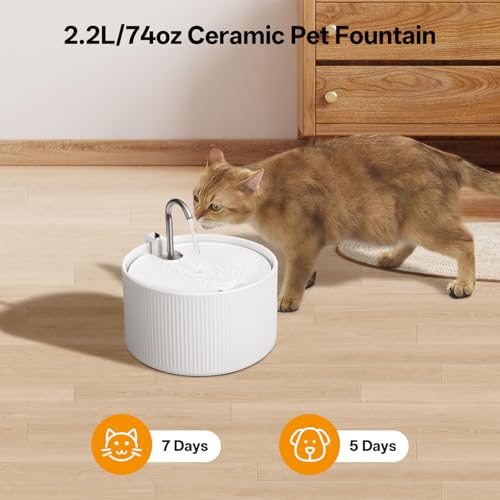
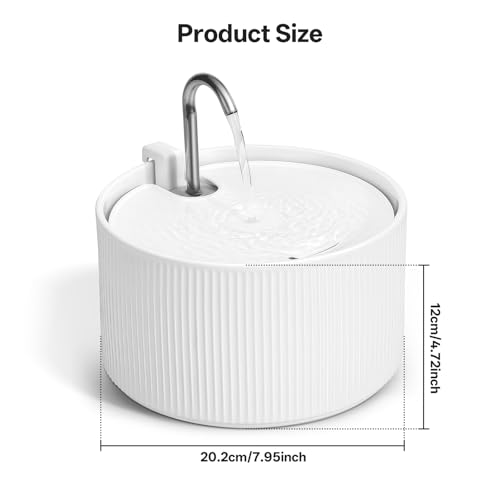
With a 2.2L or 74oz capacity, this bowl holds enough water for one cat for several days or for two cats and even small dogs without constant refills. That volume is practical if you work long hours, travel overnight, or simply want to avoid topping off a small bowl twice a day. The open bowl design also gives whisker sensitive cats more room to drink without contact on the sides.
The generous capacity does not mean you should leave water unchanged for long periods. Like all recirculating fountains, it still needs regular water changes and filter care to keep circulation fresh. For compact kitchens or studio apartments, consider how the footprint fits your space alongside other essentials, and browse compact cat water fountains for small apartments if counter area is limited.
5 Layer Filtration With Charcoal and Foam
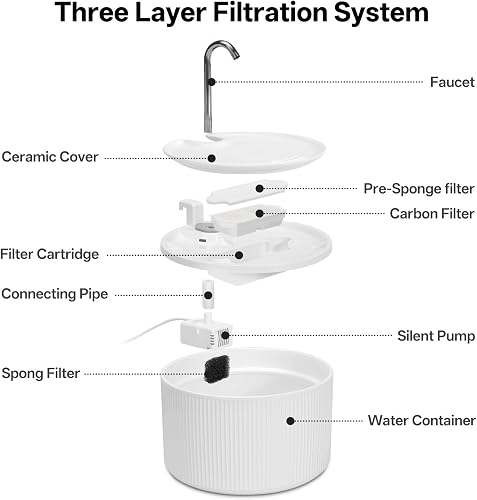
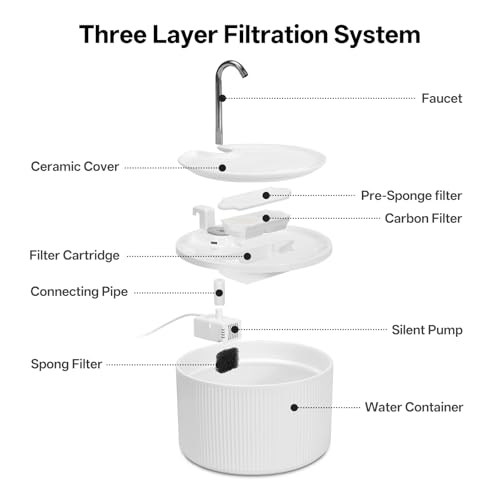
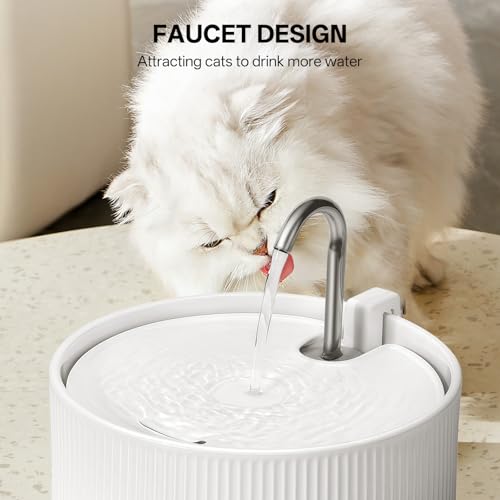
Filtration is where this fountain aims to justify daily use. It uses a replaceable charcoal filter to help reduce odors and impurities and a foam filter that captures hair, dirt, and food particles before they reach the pump. The moving water itself is intended to attract cats who prefer a flowing source over still water, which can encourage more frequent drinking throughout the day.
The system is described as a 5 layer setup, with the charcoal and foam working together to keep water clearer between cleanings. You will need to rinse the foam regularly and replace the charcoal filter on schedule, with frequency depending on water hardness, number of pets, and how often hair and debris enter the bowl. Owners who want minimal upkeep often compare filtration designs in our guide to washable cat water fountains with easy clean designs to gauge filter access and replacement effort.
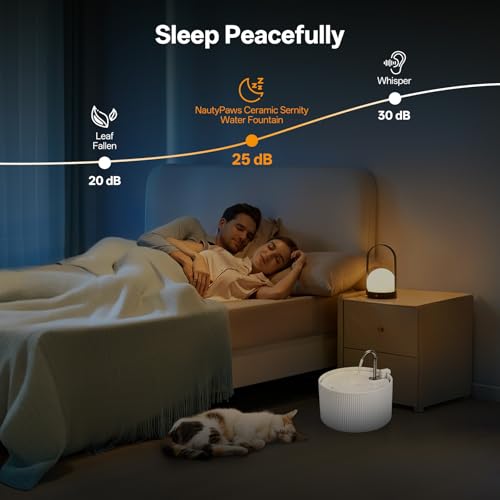
Quiet Pump Rated Under 30 Decibels
Noise is a common reason cats avoid fountains, and a loud pump can also disrupt a quiet home at night. This model uses a newer generation motor rated at less than 30 decibels, which is intended to keep the sound to a soft hum rather than a noticeable buzz. That level is generally low enough to place in a bedroom, hallway, or open living area without drawing attention.
Quiet operation also depends on keeping the pump submerged and free of hair or mineral buildup, as low water or a clogged impeller will increase sound. The design allows for simple disassembly for cleaning and maintenance, which helps maintain that low noise profile over time. If silence is your top filter, see our curated list of quiet cat water fountains to compare decibel ratings and pump placements.
Where It Comes Up Short
Ceramic brings clear hygiene benefits, but it also introduces trade offs you should weigh before buying. The porcelain bowl and lid are heavier and less forgiving than plastic if dropped, so handling during cleaning requires care, and the material is not as portable if you like to move the fountain between rooms. While the smooth surface wipes down easily, you will still need to hand wash or carefully clean around the pump and filters, and you must remove electrical components before any deep cleaning.
The fountain offers a single flowing bowl style rather than multiple flow modes such as a faucet style stream and a bubbling mode. Cats who are very particular about stream height or who prefer a tall arc may need time to adjust to the bowl circulation. Filter and foam replacement is also ongoing, so factor in routine purchases and the habit of checking the foam for trapped hair, especially in shedding seasons or multi pet homes.
Who Should Buy This
This Ceramic Cat Water Fountain is a strong match for owners who want a hygienic, stable, and visually clean option that encourages drinking without the odor retention or scratching that can affect plastic. You will appreciate it most if you value a quiet pump for shared living spaces, want a 2.2L capacity that reduces refill frequency, and prefer a smooth porcelain surface that rinses quickly and looks at home in a kitchen or living room. It also suits households with one or two cats or a small dog that share a water source and benefit from charcoal and foam filtration to keep water clearer between changes.
Who Should Skip It
This fountain is not ideal for owners who need an ultra lightweight, shatter resistant, or highly portable fountain for frequent travel or for homes where the fountain will be moved and bumped often, as porcelain requires more careful handling than plastic. It is also not a good fit if you want multiple flow settings to entice a picky drinker who only responds to a tall faucet stream, or if you prefer a model with no filter replacements at all, in which case you should skip this option and consider a simpler gravity bowl.
Frequently Asked Questions
Is a ceramic cat water fountain worth it compared to plastic or stainless steel?
Ceramic is worth it if your priorities are hygiene, odor resistance, and stability, since glazed porcelain resists biofilm and does not retain smells the way some plastics can. Stainless steel is also hygienic and lighter, while plastic is often cheaper and lighter but may show scratches over time. Your choice should reflect your cat’s preferences, your cleaning routine, and how important weight and appearance are in your home in 2026.
How often do you need to clean this ceramic fountain and replace the filters?
Plan to rinse the bowl and foam filter every few days and do a deeper clean weekly, with charcoal filter replacement every two to four weeks depending on water quality and number of pets. Always unplug the fountain, keep the pump submerged during use, and rinse the impeller to prevent hair or mineral buildup that can increase noise. Regular upkeep keeps the flow inviting and helps the filtration perform as intended.
Will a quiet ceramic fountain help a cat that is afraid of running water?
A pump rated under 30 decibels can help sensitive cats feel more comfortable, since low sound and a gentle circulation are less startling than a loud stream. Place the fountain in a calm, low traffic spot, keep water at the recommended level, and allow your cat to approach on their own terms without forcing interaction. If your cat remains hesitant, try adjusting location or bowl placement and consult your veterinarian for hydration strategies tailored to your pet.
Browse more picks in our Cat Water Fountains category, or see our related guide on Quiet Cat Water Fountains 2026: 8 Silent Picks for Peaceful Homes.

Write Your Review
No reviews yet. Be the first to share your experience!