

If your cat ignores a still water bowl but shows interest in a running tap, you are not alone. Many indoor cats prefer moving water, and a ceramic fountain can make hydration more inviting while blending into your kitchen or living room decor.
Always consult your veterinarian before introducing any new product to your pet, especially if your pet has an existing health condition.
This article contains affiliate links. If you buy through one of our links, CozyNestPaws may earn a commission at no extra cost to you. Commissions never influence which products we recommend or how we rank them. Read our Affiliate Disclosure for details.

Prime Ceramic Cat Water Fountain 2.2L/74oz



As an Amazon Associate we earn from qualifying purchases. Product prices and availability are accurate as of the date/time indicated.
What Stands Out
The Ceramic Cat Water Fountain focuses on a simple idea: keep water moving, keep it clean, and keep the materials cat friendly. Its feature set reflects that goal without adding complex controls or app connectivity.
All-Ceramic Body With Smooth Porcelain Surface
Unlike many fountains that pair a ceramic base with a plastic top, this model uses porcelain for the main drinking structure. The smooth, glazed surface resists biofilm buildup and helps prevent the chin acne some cats develop with plastic bowls. It also gives the fountain a heavier, more stable feel that is less likely to slide when a cat drinks.
The white porcelain finish is neutral and easy to wipe down between deep cleans. Because the surface is nonporous, odors and stains are less likely to linger compared to plastic alternatives. You can rinse the bowl and lid quickly each day and still do a thorough wash on your regular schedule.
2.2L Capacity With 5-Layer Filtration System
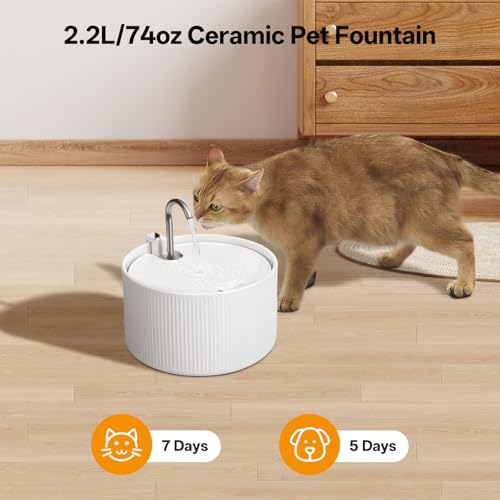
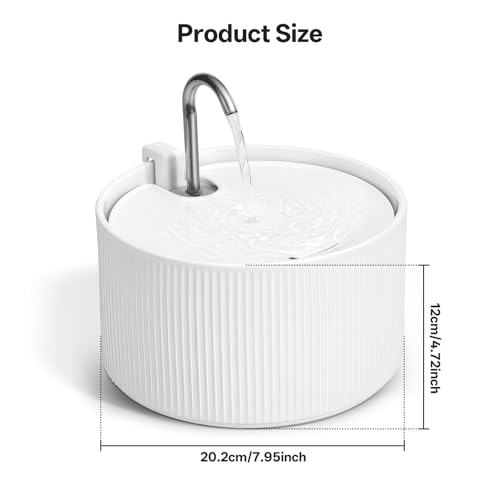
The fountain holds 2.2L or 74oz, which is a practical size for one or two cats and for small dogs as well. That volume means fewer refills during the week while still keeping the footprint compact enough for a counter, side table, or kitchen corner. For apartments, this balance is especially useful, as noted in our guide to the best compact cat water fountains for small apartments.
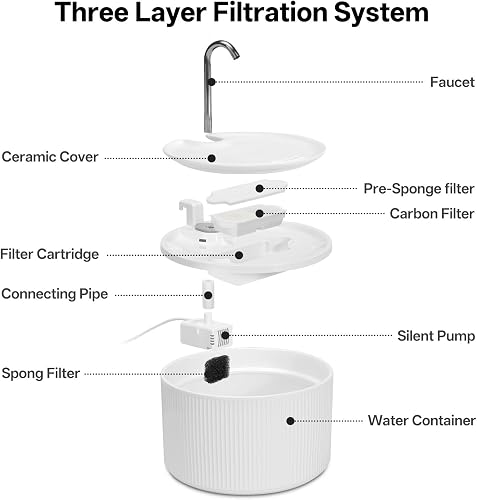
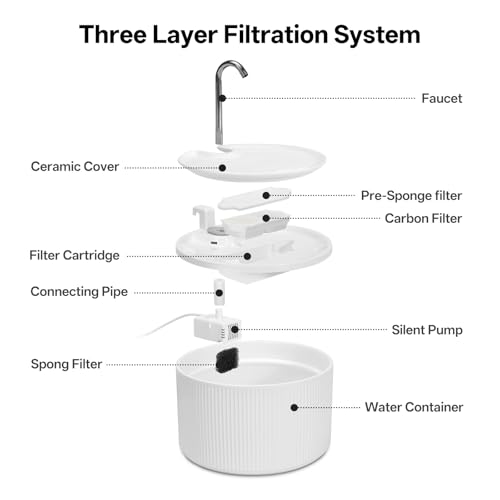
Filtration is handled by a 5-layer system that pairs a replaceable charcoal filter with a foam filter. The charcoal component helps reduce odors and impurities, while the foam captures hair, dirt, and food particles that cats often track into the water. Flowing water plus filtration keeps the supply fresher than a static bowl and can encourage picky drinkers to visit more often.
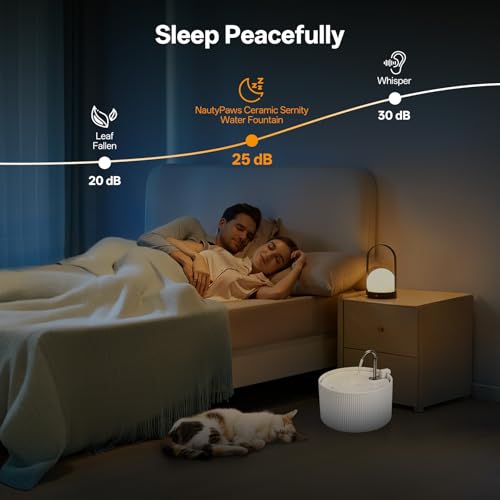
Extremely Quiet Pump Rated Below 30 Decibels
Noise is a common reason cats avoid fountains, and this model addresses it with a latest-generation pump rated at less than 30 decibels. The manufacturer describes the motor technology as super quiet, which helps the fountain blend into background household sounds. For noise sensitive cats and for owners who work from home, that low hum matters.
A quiet pump also makes placement more flexible. You can keep the Ceramic Cat Water Fountain in a bedroom, hallway, or open plan living area without worrying about a constant buzz. If silence is your top priority, you may also want to compare it with other options in our quiet cat water fountains roundup.
Simple Disassembly and Easy to Clean Design
Ceramic is valued for hygiene, but only if the fountain is easy to take apart. This design emphasizes hassle free disassembly for cleaning and maintenance, so you can separate the porcelain bowl and lid from the pump and filters. The smooth interior allows for a quick wipe down, and the components reassemble without tools.
Regular cleaning still matters for any fountain, even a ceramic one. The brand recommends routine rinsing and filter care to keep flow steady and water clear. That straightforward routine is similar to what we highlight in best washable cat water fountains, where simple construction often predicts consistent upkeep.
Where It Comes Up Short
The same porcelain that makes this fountain attractive also makes it heavier and more fragile than plastic. You will want to lift it with both hands when full, and you should avoid placing it where it could be knocked off a high counter. Hand washing is gentle on the glaze, and you must remove electrical and filtration parts before any deep clean.
Filtration is effective but not maintenance free. The charcoal filter and foam need regular rinsing and periodic replacement, and the intervals depend on your water hardness, how many pets use the fountain, and how often you top it off. If you prefer a set-and-forget system, the need to track filter changes and keep the pump submerged may feel like extra work compared to a basic bowl.
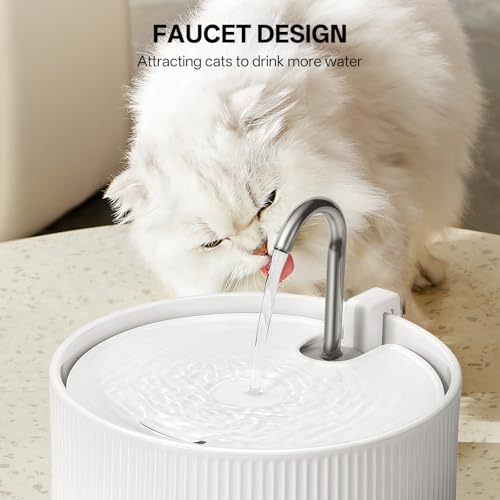
Flow options are also simple by design. This model focuses on a steady, quiet stream rather than multiple adjustable modes or a faucet style spout. Cats who strongly prefer a tall arching stream or a bubbling mound may need time to adjust, and households that want variable flow control might look for a model with explicit mode switches.
Who Should Buy This
This fountain is a strong match for owners who want a hygienic, stable, and visually clean option for one or two cats or a small dog. The 2.2L capacity suits daily use without constant refilling, and the quiet pump suits apartments, bedrooms, and home offices where noise carries. If your cat is hesitant about plastic bowls or you want a bowl that stays put and wipes clean quickly, the porcelain build is a clear advantage.
It also fits buyers who value straightforward care over extra features. With no complex electronics, the routine is simple: keep the pump submerged, rinse the foam, replace the charcoal filter as needed, and wipe the smooth ceramic. That simplicity helps you stay consistent, which is the most important factor in keeping water appealing.
Who Should Skip It
This fountain is not ideal for households that need an ultra-light, travel friendly, or shatter proof option for frequent moves or for very rough handling by large pets. If you want a fountain you can toss in a bag, carry with one hand when full, or let large dogs drink from without supervision, this ceramic model is not the right choice and you should skip this style in favor of a durable plastic alternative.
It is also not a good fit if you prefer minimal maintenance and do not want to manage filter replacements or regular pump rinsing. Homes with very hard water or heavy shedding may need more frequent cleaning, so consider whether you can commit to that routine before choosing a filtered fountain.
Frequently Asked Questions
Is a ceramic cat water fountain better than plastic for daily use?
Ceramic and porcelain are often preferred because they are nonporous, odor resistant, and easy to wipe clean, which helps reduce buildup that can affect taste. Plastic can be lighter and less fragile, but it may retain odors and show scratches over time. For many cats, especially those prone to chin irritation, ceramic is a practical upgrade.
How often should you clean the Ceramic Cat Water Fountain and replace its filters?
Plan on rinsing the bowl and wiping the interior every few days, with a deeper clean each week that includes rinsing the pump and foam. Charcoal filter replacement timing varies with water quality and number of pets, so follow the included instructions and replace sooner if flow slows or odors appear. Keeping the pump submerged and free of hair helps maintain quiet operation.
Will the pump noise bother a shy cat or disturb a quiet home in 2026?
The pump in this model is rated below 30 decibels, which is designed to be extremely quiet for both pets and people. Most cats adjust faster to a soft, consistent sound than to a loud or irregular one. Place the fountain on a level surface, keep water at the recommended level, and allow a few days for a cautious cat to approach at its own pace.
Browse more picks in our Cat Water Fountains category, or see our related guide on Quiet Cat Water Fountains 2026: 8 Silent Picks for Peaceful Homes.



Write Your Review
No reviews yet. Be the first to share your experience!