

Making your own dog treats at home lets you control every single ingredient that goes into your pet’s bowl. If you live in a compact space, finding the best food dehydrator for dog treats for small apartments means balancing a compact footprint with enough power for safe meat drying. A bulky machine will take over your counter, while an underpowered one will leave you with unsafe, partially dried treats.
This guide covers what actually matters when choosing a dehydrator for tight kitchen spaces. We evaluate countertop footprint, operating noise, temperature ranges, and tray materials so you can make an informed decision without trial and error.
This article contains affiliate links. If you buy through one of our links, CozyNestPaws may earn a commission at no extra cost to you. Commissions never influence which products we recommend or how we rank them. Read our Affiliate Disclosure for details.
Quick Picks at a Glance

Prime Cosori P501 Stainless Steel Dehydrator, 176F Max

Septree DBC-12C 12-Tray Stainless Steel Dehydrator

Prime Cosori CFD-N051-W Food Dehydrator with 165F

HOPERAN 14-Tray Stainless Steel Food Dehydrator

Tupoyi Food Dehydrator: 5-Tray, One-Touch Drying

Prime ARINOO H12-C001 12-Tray Stainless Steel Dehydrator
As an Amazon Associate we earn from qualifying purchases. Product prices and availability are accurate as of the date/time indicated.
Pros
- All stainless steel food contact surfaces
- 176 degree max meets USDA jerky safety guidance
- Rear fan for even horizontal airflow
- Compact countertop footprint
- Includes mesh screen and fruit roll sheet
Cons
- Only five trays with no expansion option listed
- 480 watt motor is mid-range for larger batches
Pros
- 12 large stainless steel trays included
- Wide temperature range for diverse foods
- Dishwasher-safe 304 stainless steel trays
- Automatic overheat protection built in
- Runs quietly per multiple verified reviews
Cons
- Large footprint may crowd smaller countertops
- Heavier than typical countertop dehydrators
- Limited review pool for long-term reliability
Pros
- Precise 1-degree temperature control up to 165F
- Solid shell more durable than clear plastic
- Expandable from five to seven trays
- Quiet operation below 47 dB
- Includes 50-recipe cookbook
Cons
- Round tray shape limits loading efficiency
- 350 watts may be slow for large batches
- Additional trays and sheets sold separately
Pros
- 14 large stainless steel trays
- Dual fans with 360-degree airflow
- Wide temperature range up to 196F
- Quiet operation below 48dB
- Dishwasher-safe trays and accessories included
Cons
- Interior fans reduce usable tray space
- Thermostat accuracy is only fair per reviewers
- Bulkier footprint at over 23 pounds
Pros
- One-touch preset drying modes for ingredients
- Under 48 dB noise level for quiet operation
- Auto shutoff and overheat protection included
- 350-watt motor preserves 97% of nutrients
- 3.5 square feet of total drying space
Cons
- Trays may warp in dishwasher despite claims
- Replacement parts not shipped to the US
- Reported power fault defaulting to 30 seconds
Pros
- 12 large stainless steel trays
- 800W dual-fan even drying
- Wide 85 to 195 degree Fahrenheit range
- Quiet operation under 50 dB
- Dishwasher-safe food-grade trays
Cons
- No verified customer reviews yet
- Large footprint may crowd small kitchens
- Relatively new brand with limited track record
Buying Guide: Choosing the Best Food Dehydrator for Dog Treats for Small Apartments
Countertop Footprint and Storage
In a small apartment, counter space is premium real estate. A round dehydrator with a solid plastic housing, like the Cosori Food Dehydrator, 5 BPA-Free Trays, takes up less room than a square stainless steel model. Look at the dimensions before buying, because a dehydrator that lives on your counter needs to fit alongside your everyday appliances.
Some compact models are tall rather than wide, which helps if your counter is shallow. The Cosori Food Dehydrator, 5 Stainless Steel Trays measures 13.9 inches by 11.3 inches by 8.9 inches, offering a shape that slides into tight corner spaces easily.
Operating Noise for Apartment Living
Dehydrators run for hours at a time, so fan noise is a real concern in an apartment with an open kitchen layout. Models that operate below 50 decibels will fade into the background, while louder ones will sound like a running microwave. This is especially important if you dry treats overnight while you sleep.
For quiet operation, look for decibel ratings in the product specifications. A quiet dehydrator is as valuable as orthopedic blackout curtains for small spaces when you are trying to keep a compact home peaceful. The right machine will hum quietly without disturbing your household.
Temperature Range for Safe Meat and Jerky
Drying meat for dog treats requires a specific temperature range to ensure food safety. The USDA recommends temperatures of at least 165 degrees Fahrenheit for safe beef jerky, which means your dehydrator needs to reach that threshold. Some entry-level models only reach 158 degrees, which falls short of that safety standard.
The HOPERAN 14 Tray Food Dehydrator Machine for Jerky reaches up to 196 degrees, giving you a wide range for different proteins. A wide temperature range gives you the flexibility to dry delicate herbs at low heat and tough meats at high heat.
Horizontal Versus Vertical Airflow
Airflow design determines how evenly your treats dry and how often you need to rotate trays. Horizontal airflow, which uses a rear fan, pushes air evenly across all trays. This design eliminates the need to swap tray positions halfway through the cycle.
Vertical airflow models pull air up or down through stacked trays, often leaving the top or bottom tray less dried. If you plan to make large batches of treats, a horizontal fan like the one in the Cosori Food Dehydrator, 5 Stainless Steel Trays will save you time and frustration.
Tray Material and Food Safety
Tray material matters because plastic can leach chemicals at high temperatures over time. BPA-free plastic trays are common in entry-level models and are generally considered safe for home use. For maximum peace of mind, stainless steel trays are the most durable option.
Stainless steel trays are also easier to clean and dishwasher safe. The Food Dehydrator Machine with 12 Stainless Steel uses 304 food-grade stainless steel, which resists corrosion and handles repeated hot washing without breaking down.
Capacity Versus Counter Space
More trays mean more treats, but a 12 or 14 tray dehydrator is a serious commitment for a small apartment. Large models are best suited for batch cooking days where you can leave them running in a spare room or a corner. For weekly treat making, a 5 tray model is usually sufficient for a single dog.
Consider how much treats you actually need before buying a large machine. Managing ingredient storage and dried treat containers is similar to organizing quiet meal prep containers that stay sealed and silent in a compact kitchen.
Final Thoughts
For apartment dwellers, the Cosori Food Dehydrator, 5 Stainless Steel Trays offers the best balance of compact size and safe horizontal airflow. If you need to dry larger batches for multiple dogs or batch prep, the HOPERAN 14 Tray Food Dehydrator Machine for Jerky provides the capacity and temperature range to handle heavy loads.
Frequently Asked Questions
Can you make dog treats in a food dehydrator?
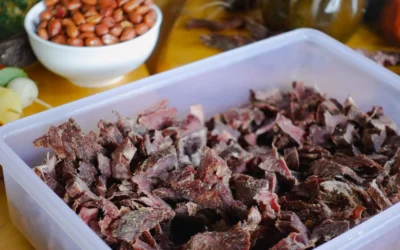
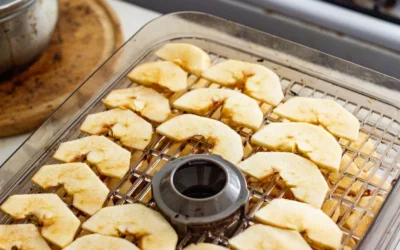
Yes, a food dehydrator is an excellent tool for making dog treats at home. You can dry sliced sweet potatoes, chicken strips, and organ meats without adding preservatives or fillers. Dehydrating preserves the nutrients while creating a chewy texture that most dogs enjoy.
What temperature should I use to dehydrate dog treats?
For meat-based treats, the dehydrator should reach at least 165 degrees Fahrenheit to ensure food safety. For fruits and vegetables, a lower temperature between 135 and 145 degrees is usually sufficient. Always check the specific temperature guidelines for the protein or produce you are drying.
How long does it take to dehydrate dog treats?
Drying time depends on the moisture content of the food and the thickness of the slices. Most meat treats take between 6 and 12 hours, while fruits and vegetables take less time. A dehydrator with a precise timer will help you avoid over-drying or under-drying your batches.
Is a dehydrator loud enough to bother neighbors in an apartment?
Most modern dehydrators operate quietly, with many models registering under 50 decibels. This noise level is comparable to a quiet refrigerator humming in the background. If you are sensitive to noise, look for models that specifically advertise quiet operation, or pair it with ceramic blackout curtains for small apartments to dampen ambient sound.
Do I need stainless steel trays for dehydrating meat?
Stainless steel trays are the most durable and easiest to clean, especially when working with raw meat. However, BPA-free plastic trays are also safe for food use and are standard in most entry-level models. The choice often comes down to your budget and personal preference regarding food contact materials.
Can I leave my dehydrator running overnight?
Yes, many people run their dehydrators overnight to complete long drying cycles. Look for a model with an automatic shut-off feature and overheat protection to ensure safe operation. These safety features will give you peace of mind while you sleep.
How do I store homemade dehydrated dog treats?
Store dehydrated treats in an airtight container in a cool, dark place to maximize shelf life. If you have dried them thoroughly, they can last for several weeks at room temperature. For longer storage, keep them in the refrigerator or freezer to prevent mold growth.
Browse more picks in our Food Dehydrators category.
These picks are not recommended for commercial kitchens or high-volume cooking needs; they are designed for everyday home use.




Write Your Review
No reviews yet. Be the first to share your experience!